“Specialty coffee” gets used a lot in Lahore right now. It appears on café signage, Instagram bios, and menu headers across DHA, Gulberg, and F-11. The problem is that the word has become so widely applied that it has started to lose its meaning — a café can call its coffee specialty without any of the sourcing, roasting, or brewing discipline that the term was originally invented to describe.
This matters if you’re trying to make an informed decision about where to spend your time and money. So here is a clear, honest breakdown of what specialty coffee actually means, what separates it from regular commercial coffee, and what to look for when a café claims to serve it.
What Is Specialty Coffee? The Actual Definition
Specialty coffee isn’t a marketing category — it’s a grading system. The Specialty Coffee Association (SCA) defines specialty coffee as green coffee that scores 80 points or above on a 100-point standardised cupping scale evaluated by a certified Q Grader. Coffee that scores below 80 is classified as commercial or commodity grade. Coffee that scores between 80 and 84 is “specialty.” Between 85 and 89 is “excellent.” Above 90 is “outstanding” — a category very few coffees in the world reach in any given year.
That score is based on specific, measurable criteria: aroma, flavour, aftertaste, acidity, body, balance, uniformity, clean cup, sweetness, and the absence of defects. A coffee with even one primary defect — a bad bean that introduces off-flavour — cannot qualify as specialty regardless of how everything else scores.
This is what makes the term meaningful when it’s used correctly: it refers to a specific, traceable quality threshold, not a general feeling about the coffee or a marketing decision by the café.
What Specialty Coffee Is Not
It’s not the same as “premium” — a word that has no standardised definition and can be applied to anything.
It’s not about the price of the final drink — a ₨300 latte made with specialty beans is still specialty coffee; a ₨800 drink made with commercial beans is not.
It’s not about the equipment — an expensive espresso machine cannot turn commodity-grade beans into specialty coffee. The quality ceiling is set by the bean, not the machine.
And it’s not about the café’s aesthetic — dark wood interiors and latte art do not constitute specialty coffee. Only the bean’s origin, grading, and handling do.
The Third Wave — What It Means and Why Lahore Is Part of It
“Third wave coffee” is the cultural and industry movement that gave rise to the modern specialty coffee scene. Understanding where it came from makes it easier to recognise what it looks like when it arrives in a city like Lahore.
The First and Second Wave
The first wave of coffee culture — roughly from the 1800s through the mid-20th century — was about making coffee widely accessible. Instant coffee, canned coffee, mass production. Coffee as a commodity consumed for function rather than flavour.
The second wave, led globally by chains like Starbucks from the 1980s onward, introduced the idea of coffee as an experience — cafés as destinations, espresso-based drinks, flavour variety. The coffee was often still commercial-grade, but the experience around it elevated the culture. This is the wave that built café culture in Pakistan through the 2000s and early 2010s — Second Cup, Coffee Bean & Tea Leaf, Gloria Jean’s.
The Third Wave
The third wave, which began in North America and Europe in the early 2000s and has been spreading globally since, treats coffee the way fine wine is treated: as an agricultural product with specific origin characteristics, where every decision from farm to cup affects what ends up in the glass. Third wave coffee is interested in where the beans came from, who grew them, how they were processed, how they were roasted, and how all of those variables interact to produce a specific, intentional flavour rather than a consistent, generic one.
Lahore is in the early stages of its third wave right now. The shift from second-wave chain café culture to specialty-focused independent café culture is visible in DHA, and it’s being driven by a generation of customers who have experienced specialty coffee elsewhere and are bringing those expectations home.
What Actually Separates Specialty from Commercial Coffee — Step by Step
The difference between specialty and commercial coffee is not one decision — it’s a series of decisions made across the entire supply chain. Here is where those decisions happen.
At the Farm
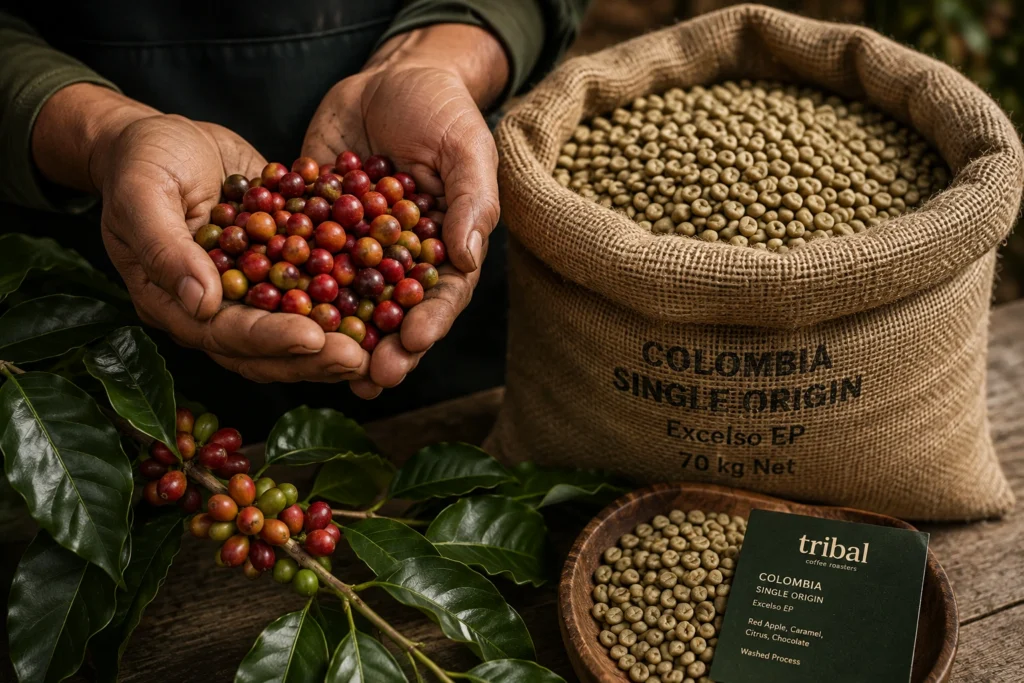
Specialty coffee starts with intentional growing conditions. Altitude, climate, soil composition, and varietal selection all contribute to the flavour potential of the green bean. Specialty farms typically hand-pick only ripe cherries rather than strip-harvesting entire branches — a labour-intensive process that removes the defects that would otherwise lower the cup score. Commercial farms strip-harvest for efficiency, which means unripe and overripe cherries enter the processing chain alongside the good ones.
At Processing
After harvesting, coffee cherries go through one of several processing methods — washed, natural, or honey — each of which dramatically affects the final flavour profile. Washed processing produces clean, bright, high-acidity coffees. Natural processing produces fruity, complex, full-bodied coffees. Honey processing sits between the two. Specialty producers choose their processing method deliberately based on what will most clearly express the origin characteristics of their specific beans.
At Roasting
Commercial coffee is typically roasted dark enough to hide defects and create a consistent, predictable flavour across very large batches of mixed-origin beans. The dark roast masks whatever the bean actually tastes like beneath a uniform bitterness. Specialty coffee is roasted at the lightest level that best expresses the bean’s natural characteristics — which means the flavour of the origin, the farm, and the processing all remain present in the final cup rather than being burned away.
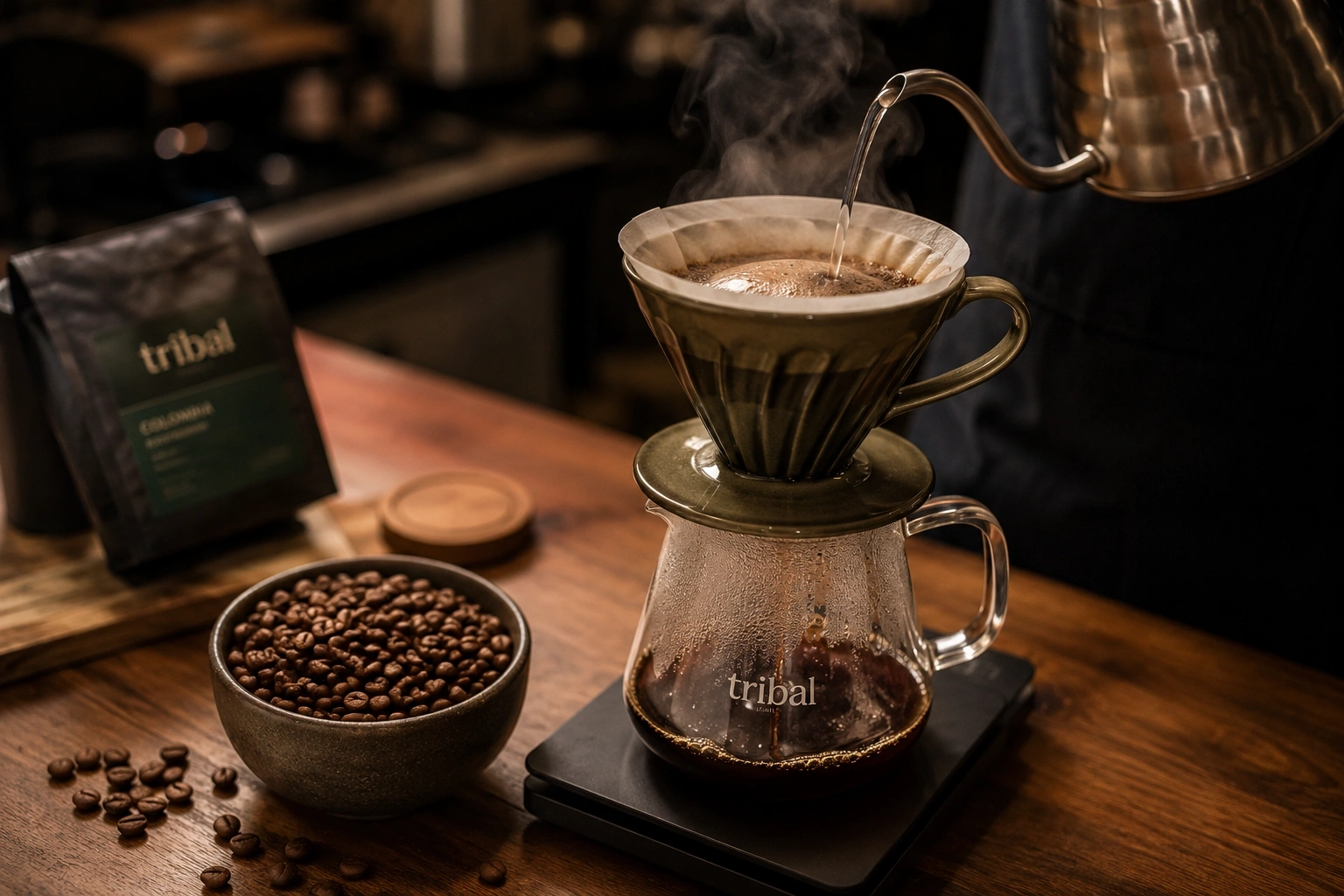
At Tribal, beans are roasted in-house, which means roast profiles are developed specifically for each origin rather than applied generically. The Costa Rican Single Origin available through the pour over collection is a direct example of this: a bean with a specific origin story, roasted to highlight its natural brightness and clean acidity, brewed through a V60 that shows every layer of that profile clearly.
At Brewing
Even a perfect specialty bean, roasted correctly, can be ruined at the brewing stage. Over-extraction produces bitterness. Under-extraction produces sourness. The wrong water temperature, the wrong grind size, or the wrong brew ratio all push the cup away from where it should be. Specialty coffee brewing — whether espresso, pour over, or any other method — requires calibration, attention, and the willingness to adjust when something is off.
This is what a trained barista at a genuine specialty café does that a button-operated commercial machine cannot: they read the coffee, adjust the variables, and pull each cup to where it’s supposed to be.
Specialty Coffee in Lahore — What to Look For
If you want to verify whether a café is genuinely serving specialty coffee rather than just labelling it that way, here are the specific questions to ask and signs to look for.
Ask Where the Beans Are From
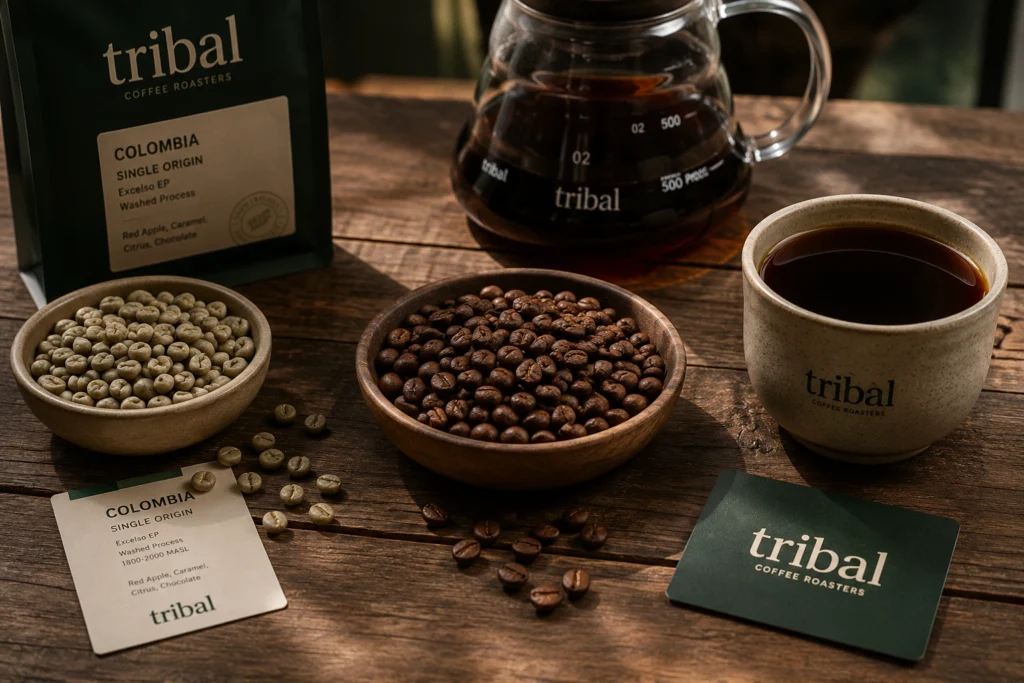
A specialty café should be able to tell you the origin of their beans — at minimum the country, ideally the region, and ideally the farm or cooperative. “Ethiopia” is a start. “Ethiopia, Yirgacheffe, washed process, Heirloom varietal” is the answer that reflects genuine sourcing knowledge. If the staff can’t tell you anything beyond “we import them,” that’s a signal.
Ask When the Beans Were Roasted
Specialty coffee degrades meaningfully after six to eight weeks post-roast. A café serving genuinely fresh specialty coffee will know their roast date and will typically not serve beans beyond this window. If there’s no answer to this question, the beans are likely not fresh — and potentially not specialty grade.
Look at the Grinder
Cheap, blade-based grinders produce inconsistent grind sizes that make proper extraction impossible regardless of bean quality. A specialty café should be grinding with a quality burr grinder calibrated regularly. If the grinder looks like something from a supermarket, that tells you something.
Look for Pour Over or Manual Brew Options
The presence of a pour over or manual brew bar — V60, Chemex, AeroPress — is one of the clearest signals of a genuine specialty operation. These methods require skill, attention, and quality beans to produce a good result. A café that offers them is either committed to specialty quality or very quickly exposed for not being.
Tribal’s pour over collection exists specifically for this reason — the Costa Rican Single Origin served through a V60 is the most direct expression of specialty coffee philosophy on the Tribal menu.
Why Specialty Coffee Tastes Different — And Why That Matters
The most common reaction from people trying genuine specialty coffee for the first time is surprise: it doesn’t taste like what they expected coffee to taste like. It’s brighter, cleaner, more layered, and frequently doesn’t need sugar in a way that commercial coffee almost always does.
That surprise is the result of tasting a product that hasn’t had its natural characteristics roasted or extracted away. Commercial coffee is designed to taste like a consistent, predictable version of “coffee.” Specialty coffee is designed to taste like exactly what it is: a specific bean, from a specific place, processed and roasted and brewed to reveal rather than conceal.
Once you’ve tasted that difference, it’s difficult to go back — not because specialty coffee is objectively superior in some abstract sense, but because it’s more interesting. There’s more to pay attention to, more to appreciate, and more reason to slow down with a cup rather than treat it as a morning utility.
That’s the shift the third wave introduced to Lahore, and it’s the shift Tribal is part of.
Frequently Asked Questions
What is the difference between specialty coffee and regular coffee?
Specialty coffee refers specifically to green coffee scoring 80 or above on the SCA’s 100-point grading scale, evaluated by a certified Q Grader. Regular or commercial coffee scores below this threshold and is typically mass-produced, blended across origins, and roasted dark to create consistency. The difference in the cup is noticeable: specialty coffee has distinct origin flavours, natural sweetness, and a clean finish. Commercial coffee tastes generically bitter.
Is there genuine specialty coffee available in DHA Lahore?
Yes — Tribal Coffee at Shop 9, Sector C, DHA Phase 6, serves specialty-grade, in-house roasted coffee daily from 7AM to 1AM. The pour over collection — specifically the Costa Rican Single Origin brewed through a V60 — is the clearest expression of specialty coffee on the menu.
What is third wave coffee and is it in Lahore?
Third wave coffee is the movement that treats coffee as an agricultural product with traceable origin characteristics rather than a commodity. It prioritises sourcing transparency, light roasting to preserve origin flavour, and skilled brewing. Lahore is in the early stages of its third wave, with a growing number of independent specialty cafés — particularly in DHA Phase 6 — replacing second-wave chain café culture.
Why does specialty coffee sometimes taste sour or acidic?
Sourness in specialty coffee typically indicates under-extraction — the water hasn’t pulled enough soluble compounds from the grounds. This is a brewing variable, not a quality problem with the bean itself. A skilled barista adjusts grind size, water temperature, or brew time to correct it. High acidity in specialty coffee, by contrast, is a desirable quality — it refers to brightness and liveliness in the flavour profile, not sourness.
Does specialty coffee need sugar?
Genuine specialty coffee, brewed correctly, typically doesn’t need sugar — the natural sweetness of well-processed, lightly roasted beans is already present in the cup. The habit of adding sugar to coffee comes from commercial coffee culture, where the dark roast and low bean quality produce a bitterness that sugar masks. If you find you don’t need sugar in a cup for the first time, that’s usually a sign you’re drinking something genuinely good.
DHA Phase 6 has quietly become one of Lahore’s most productive neighbourhoods to work from — not in an office, but in a café. The combination of a young professional and student population, reliable commercial development, and a growing number
Lahore has approximately five months of weather that makes a hot cup of coffee feel like a bad idea the moment it leaves the counter. From April through August, the city runs at temperatures that put anything steaming into the
There’s a specific kind of cold coffee that appears on specialty café menus and consistently confuses people who haven’t encountered it before. It’s called a shaken espresso. It sounds simple — espresso, shaken — and it is, technically. But what