There’s a specific kind of cold coffee that appears on specialty café menus and consistently confuses people who haven’t encountered it before. It’s called a shaken espresso. It sounds simple — espresso, shaken — and it is, technically. But what shaking actually does to espresso is less obvious than the name suggests, and the result is a drink that tastes and feels categorically different from every other cold coffee format.
This guide explains exactly what a shaken espresso is, how it’s made, why the shaking matters, and how it compares to the other cold coffee options you’ve probably already tried.
What Is a Shaken Espresso?
A shaken espresso is exactly what it sounds like: one or more shots of freshly pulled espresso, shaken vigorously with ice in a cocktail shaker, then poured over fresh ice and served — either straight or with a small amount of milk.
The shaking process does three things simultaneously. It chills the espresso rapidly, which a straight pour over ice doesn’t achieve as efficiently. It aerates the espresso, introducing tiny air bubbles that create a naturally frothy, slightly velvety texture on the surface. And it emulsifies the coffee oils with the ice water, which softens the intensity of the espresso without reducing the caffeine and produces a mouthfeel that is noticeably different from iced espresso that was simply chilled.
The result is cold, concentrated, slightly frothy, and smoother than any other way of serving espresso over ice. It’s more espresso-forward than an iced latte, stronger than cold brew per serving, and lighter than both in texture.
Where It Came From — The Shakerato Origin
The shaken espresso didn’t arrive with Starbucks, though Starbucks is largely responsible for making it globally mainstream. Its roots are Italian.
The caffè shakerato has been served in Italian bars for decades — espresso, ice, and simple syrup shaken together in a cocktail shaker until frothy, then strained into a chilled martini glass. The shaking technique, the froth, the cooled espresso — all of it was there in the Italian original. What the modern café version added was milk and a larger format, making the drink more accessible and more customisable than the clean, sharp shakerato it descended from.
Starbucks popularised the format in 2021 with the Iced Brown Sugar Oatmilk Shaken Espresso, which became one of their most ordered drinks. By 2026, the shaken espresso format has moved from trend to standard — the 2026 Café Drinks Trend Report categorises it as mainstream, with chains now rotating flavour variants on top of the core technique. The Asian-flavour direction is particularly relevant: Starbucks introduced an iced ube coconut shaken espresso in spring 2026 — the same Asian ingredient territory that Tribal Cafe’s pistachio saffron range already occupies.
What Makes the Shaking Different
This is the part most people skip over, and it’s the most important part.
When you pour hot espresso directly over ice — which is how most café chains make iced coffee — the espresso cools unevenly and the oils sit on the surface separately from the water. The result is flat, sometimes slightly oily, and doesn’t have a consistent texture throughout. It also dilutes faster as the ice melts into the already-watery espresso.
Shaking changes all of this.
Rapid, even chilling: Shaking the espresso vigorously with ice chills it almost instantly and evenly throughout the liquid, rather than just at the points of contact with the ice.
Aeration: The vigorous shaking introduces air into the espresso, creating a micro-foam layer on the surface — similar in concept to the crema on a hot espresso shot, but cold. This froth is what gives a shaken espresso its distinctive appearance and the slightly velvety texture on the first sip.
Emulsification: Shaking forces the coffee oils and water to integrate rather than separate. This produces a more uniform flavour throughout the drink and a mouthfeel that is noticeably softer and less sharp than straight iced espresso.
The result is a drink that is simultaneously more concentrated than an iced latte, smoother than you’d expect from straight espresso, and more interesting in texture than almost any other cold coffee format.
Shaken Espresso vs Everything Else
Shaken Espresso
Iced Latte
Cold Brew
Iced Americano
Base
Espresso, shaken
Espresso + milk
Cold-steeped coffee
Espresso + cold water
Milk volume
Minimal (optional)
High
None typically
None
Texture
Frothy, aerated
Creamy, smooth
Smooth, flat
Thin, watery
Coffee strength
Strong
Mild
Moderate-strong
Moderate
Acidity
Present, bright
Softened by milk
Low
Present
Best for
Espresso lovers who want cold
Mild, creamy preference
Smooth, low-acid cold coffee
Simple, no-frills iced coffee
Shaken Espresso vs Iced Latte
The shaken espresso is more espresso-forward and less milk-dependent than an iced latte. An iced latte uses a much larger volume of milk — typically three to four parts milk to one part espresso — which produces a mild, creamy drink where the coffee flavour is present but soft. A shaken espresso uses minimal or no milk, which means the espresso flavour is at the front throughout the drink. The aeration from shaking gives it a lightness that an iced latte doesn’t have despite the lower milk content.
If you want to taste the coffee clearly, the shaken espresso is the right choice. If you want something milk-forward and gentle, the iced latte wins.
Shaken Espresso vs Cold Brew
Cold brew is steeped in cold water for 12–24 hours, which produces a coffee concentrate with low acidity and a smooth, flat texture. A shaken espresso is pulled as a hot shot and then rapidly chilled, which preserves the acidity and brightness of the espresso in a way cold brew’s extraction process doesn’t. Cold brew tastes smoother and more mellow; shaken espresso tastes brighter and more alive. Cold brew is the better choice for anyone sensitive to acidity; shaken espresso is better for anyone who specifically wants the espresso character — the brightness, the complexity — delivered cold.
The Shaken Espresso at Tribal Cafe
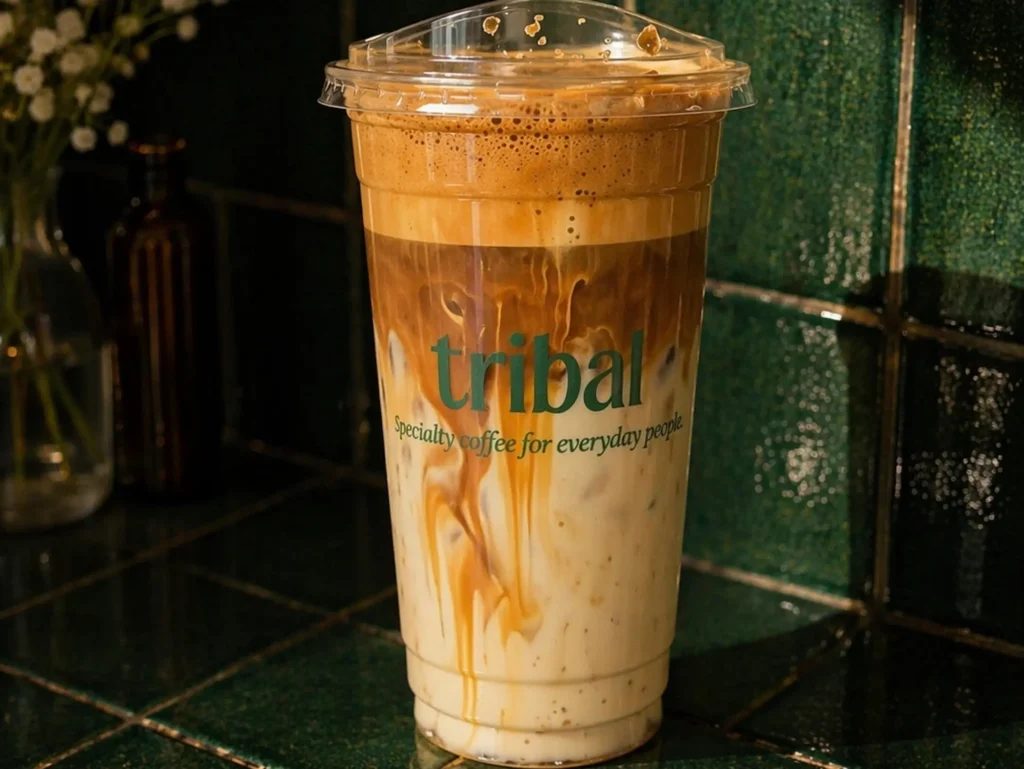
Tribal Cafe’s Shaken Espresso is part of the Signatures collection — drinks built around a specific experience rather than a standard template. A double shot pulled fresh from specialty-grade, in-house roasted beans, shaken hard over ice until chilled and aerated, then served long. The shaking is done properly — vigorously enough to produce the froth and the texture change, not just enough to chill the drink.
What you get is cold, concentrated, and considerably more interesting in texture than iced espresso poured straight. It’s lighter than an iced latte despite having more espresso character, and stronger than cold brew despite the similar cold temperature. It sits in its own category — and for hot Lahore afternoons when you want caffeine without heat, it’s among the best options on the classic espresso collection and Signatures menu combined.
Available daily at Shop 9, Sector C, DHA Phase 6, from 7AM to 1AM.
When to Order a Shaken Espresso
Order it when:
It’s a hot afternoon and a hot espresso is the wrong temperature but you still want the espresso character
You want cold coffee but find iced lattes too mild and cold brew too flat
You want something that looks and feels different from your usual order
You want maximum caffeine impact in a cold format — the shaken espresso delivers the full espresso dose without the dilution of a large iced latte
You’re trying specialty cold coffee for the first time and want something that clearly shows what the difference in bean quality tastes like
Don’t order it when:
You want something mild and milk-forward — an iced latte or a cold matcha is the better call
You’re sensitive to coffee acidity — cold brew’s lower-acid extraction is the more comfortable option
You want a large, slow-sipping drink — the shaken espresso is built for a shorter, more concentrated experience
Frequently Asked Questions
What is a shaken espresso?
A shaken espresso is one or more shots of freshly pulled espresso shaken vigorously with ice in a cocktail shaker, then poured over fresh ice and served with or without a small amount of milk. The shaking process chills the espresso rapidly, aerates it to create a frothy texture, and emulsifies the coffee oils to produce a smoother mouthfeel than straight iced espresso.
What is the difference between a shaken espresso and an iced latte?
A shaken espresso uses minimal or no milk and keeps the espresso flavour at the front. An iced latte uses a large volume of steamed or cold milk — typically three to four parts milk to one part espresso — which makes the drink milder and more creamy. A shaken espresso is stronger, more espresso-forward, and has a lighter, airier texture from the aeration process.
Is shaken espresso stronger than cold brew?
Per serving, yes — a shaken espresso delivers the full caffeine of one or more espresso shots (60–140mg depending on the number of shots) in a smaller volume. Cold brew is typically served in larger volumes and has a moderate caffeine content, though the per-ml concentration can be high if undiluted. The shaken espresso also retains the brightness and acidity of espresso that cold brew’s cold extraction doesn’t produce.
Where did shaken espresso come from?
The shaken espresso descends from the Italian caffè shakerato — espresso, ice, and sugar shaken in a cocktail shaker and served frothy. Starbucks popularised the modern café format globally in 2021 with the Iced Brown Sugar Oatmilk Shaken Espresso, and the format has since become mainstream across specialty cafés internationally.
Where can I get a shaken espresso in DHA Phase 6 Lahore?
Tribal Cafe serves the Shaken Espresso as part of its Signatures collection at Shop 9, Sector C, DHA Phase 6, Lahore, daily from 7AM to 1AM.
Is shaken espresso good for people who don’t usually like hot coffee?
Often, yes. The cold temperature and the smooth, aerated texture make the shaken espresso significantly more approachable than a straight hot espresso shot. The espresso character is still present and clear, but without the heat that many people find intense. It’s a good entry point for anyone who has found hot espresso too sharp but wants to understand what specialty espresso actually tastes like.
Lahore has approximately five months of weather that makes a hot cup of coffee feel like a bad idea the moment it leaves the counter. From April through August, the city runs at temperatures that put anything steaming into the
The matcha vs coffee debate has quietly moved from niche wellness forums into mainstream café menus. In DHA Lahore right now, you can walk into Tribal Cafe and order either a double espresso or a Coconut Cloud Matcha — and
If you’ve been to a café in DHA Lahore recently, you’ve almost certainly seen a Spanish Latte on the menu. It sits there next to the regular latte, usually at a slightly higher price, with a description that either says