If you’ve been to a café in DHA Lahore recently, you’ve almost certainly seen a Spanish Latte on the menu. It sits there next to the regular latte, usually at a slightly higher price, with a description that either says “condensed milk” or says nothing at all and just assumes you know. Most people order it once out of curiosity. Most people then order it again.
But if you’ve ever wondered what exactly makes a Spanish latte different from a regular latte — why it tastes the way it does, whether the difference is real or just marketing, and which one you should actually be ordering — this guide answers all of it clearly.
The One Ingredient That Changes Everything
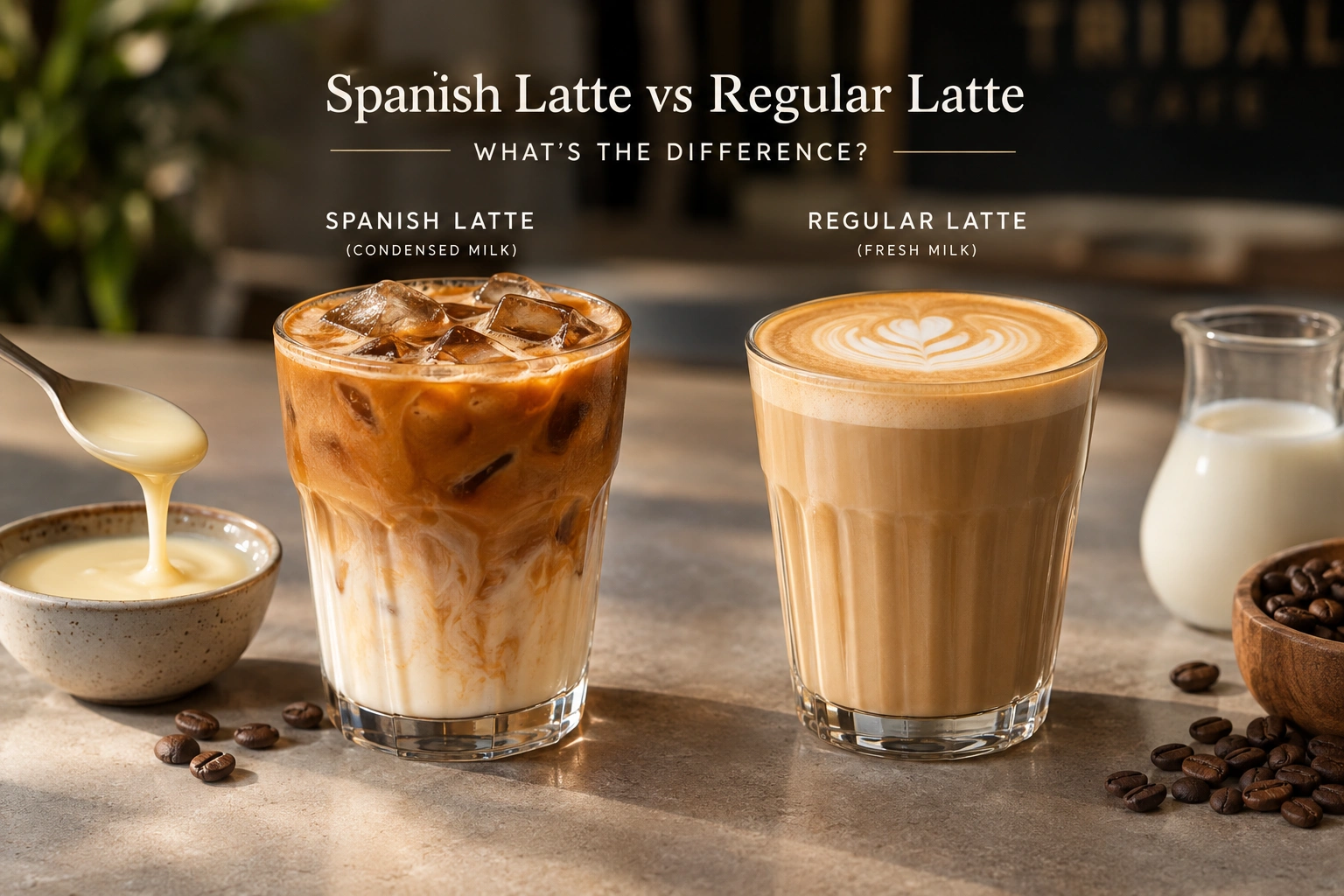
The difference between a Spanish latte and a regular latte comes down to a single ingredient: condensed milk.
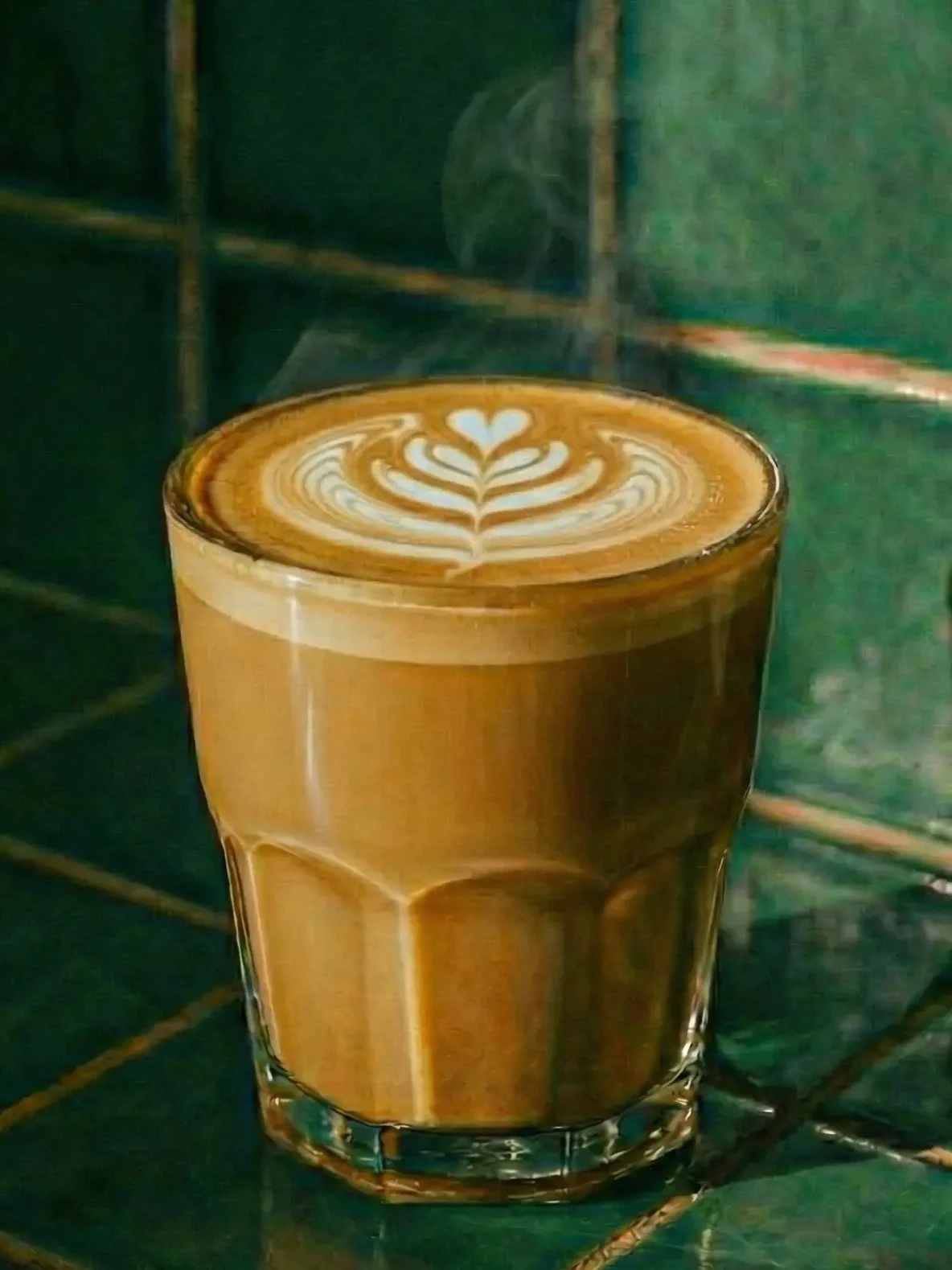
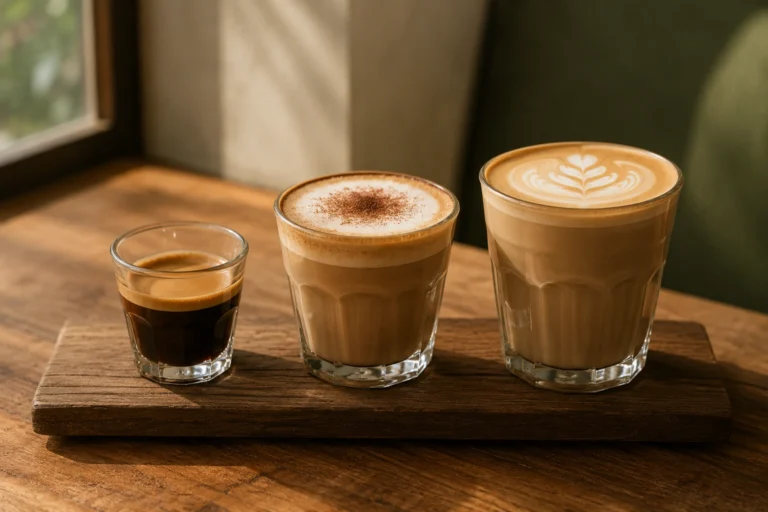
A regular latte is espresso and steamed fresh milk — typically in a ratio of one part espresso to three or four parts milk, topped with a thin layer of microfoam. The milk is the dominant element, which gives the latte its characteristic creaminess and mild flavour. Any sweetness comes from sugar added separately, not from the milk itself.
A Spanish latte replaces some or all of that fresh milk with sweetened condensed milk — or adds condensed milk alongside the fresh milk. Condensed milk is regular milk with most of the water removed and sugar added during the process, which gives it a thick, syrupy consistency and a natural caramel-adjacent sweetness that fresh milk simply doesn’t have.
That single substitution changes three things simultaneously: the sweetness, the texture, and the overall flavour profile of the drink. It’s not a subtle difference. The first sip of a Spanish latte, if you’ve only ever had a regular latte before, tastes noticeably richer, sweeter, and more complex.
Spanish Latte vs Regular Latte — Side by Side
Regular Latte
Spanish Latte
Espresso base
Yes
Yes
Milk type
Fresh steamed milk
Condensed milk + steamed milk
Natural sweetness
Low
High (from condensed milk sugars)
Texture
Light, creamy
Richer, thicker, more viscous
Flavour
Mild, coffee-forward
Sweet, slightly caramelised
Added sugar needed?
Usually yes
Rarely — already sweet
Best served
Hot or iced
Hot or iced
Who it’s for
Clean milk coffee
Those who want sweetness built in
What Does a Spanish Latte Taste Like?
The best way to describe a Spanish latte is a latte that tastes finished — like it arrived with exactly the right amount of sweetness already in it, without needing you to add anything. The condensed milk brings a warm, slightly caramelised sweetness that pairs naturally with the bitterness of espresso, creating a balance that a regular latte with added sugar never quite replicates.
The condensed milk makes the Spanish latte a bit sweeter than a standard coffee-shop latte, with a thicker, richer profile that distinguishes it from anything made with just fresh milk.
The texture is noticeably different too. Condensed milk is thicker than fresh milk, which means the Spanish latte has a slightly more substantial mouthfeel — it coats the mouth in a way a regular latte doesn’t. Not heavy, not dessert-level, but noticeably more present than a standard milk-and-espresso build.
For Pakistani coffee drinkers specifically, the flavour profile has a particular familiarity. The condensed milk sweetness sits in the same register as the sweetened chai most people grew up with — which is partly why the Spanish latte has become one of the most consistently ordered drinks in DHA cafés over the past two years.
Why the Spanish Latte Has Become So Popular in Pakistan
The Spanish latte’s rise in Pakistan isn’t accidental. It connects to something specific about how Pakistani taste preferences intersect with the growing café culture in cities like Lahore and Karachi.
Pakistani palates, shaped by decades of sweet tea culture, tend to respond well to drinks with built-in sweetness rather than drinks that require sugar to be added separately. A regular latte, drunk without sugar, can taste sharp and incomplete to someone whose reference point for hot drinks is a well-sweetened chai. The Spanish latte solves that problem at the ingredient level — the condensed milk provides the sweetness and the richness that makes the drink feel satisfying without needing adjustment.
The drink has been trending across South and Southeast Asian café menus, with cafés in Malaysia, Singapore and across the region all reporting it as one of their most ordered espresso drinks. Pakistan is following the same trajectory, and DHA Lahore’s café scene is leading that shift locally.
Is a Spanish Latte Sweeter Than a Regular Latte?
Yes — significantly. But the type of sweetness matters.
Sugar added to a regular latte sits on top of the drink as a separate layer of flavour — it makes the drink sweeter without changing its texture or base flavour profile. The condensed milk in a Spanish latte contributes sweetness that is structurally part of the drink — it changes the texture, adds the caramel-adjacent flavour of concentrated milk sugars, and integrates with the espresso in a way that added sugar simply doesn’t.
The result is a drink where the sweetness feels like it belongs rather than something applied afterwards. Whether that’s better is a matter of preference — but it’s categorically different from just adding two spoons of sugar to a regular latte.
Hot vs Iced: Which Version to Order
Both the Spanish latte and regular latte are available hot and iced, and the condensed milk difference plays out slightly differently in each format.
Hot Spanish Latte: The condensed milk integrates fully with the espresso and warm milk, creating a uniform richness throughout the drink. The sweetness is gentler when warm — the heat rounds out the edges.
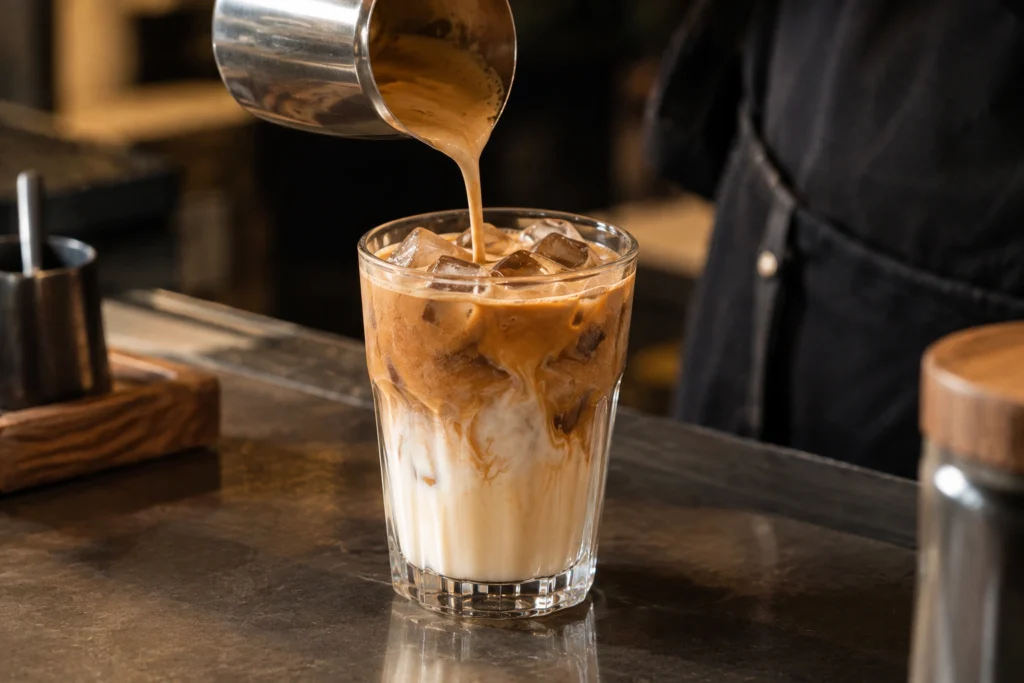
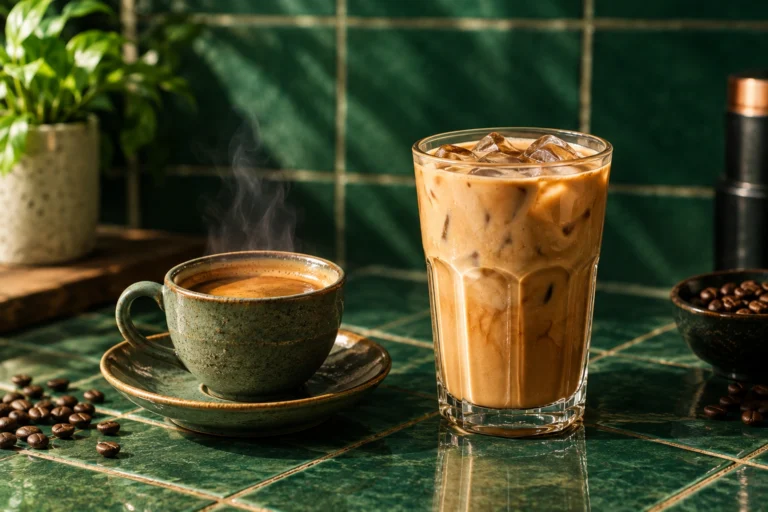
Iced Spanish Latte: The condensed milk often pools or layers visually before being mixed, creating the distinctive two-tone look that makes iced Spanish lattes one of the most photographed café drinks in Pakistan right now. Once stirred, the sweetness is more pronounced cold than hot — the chilling intensifies the condensed milk flavour. This is the version most people in DHA order during Lahore’s warmer months.
For a regular latte, the iced version tends to feel thinner and more watery than the hot version — the ice dilutes the milk as it melts. The Spanish latte holds up better over ice precisely because the condensed milk’s thickness compensates for that dilution.
You prefer your coffee mild and clean without built-in sweetness
You want something you can adjust yourself — add flavour, change the milk
You’re using it as the base for a flavoured version — the flavoured lattes collection builds on the regular latte base with hazelnut, vanilla, cookie butter, saffron and more
You’re focused on tasting the espresso quality rather than the milk
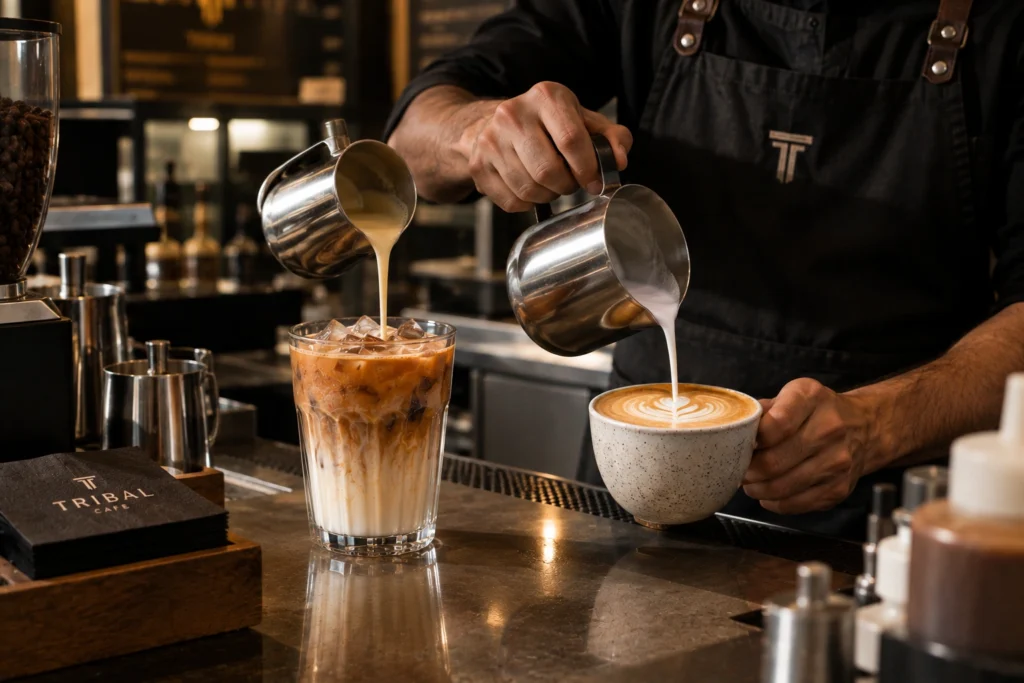
Both are made with the same specialty-grade, in-house roasted espresso base at Tribal Cafe — the difference is entirely in what surrounds it.
The Origin of the Spanish Latte — Worth Knowing
Despite the name, the Spanish latte as it’s served in South and Southeast Asian cafés is not a traditional Spanish drink. It’s an Asian take on the espresso-condensed milk combination, inspired by the Spanish café con leche tradition but adapted to local tastes. The original Spanish café con leche is simply equal parts espresso and hot fresh milk — no condensed milk involved. The condensed milk version developed as cafés in Southeast Asia adapted the concept to local taste preferences that favor sweeter, richer milk drinks.
So when you order a Spanish latte in DHA Lahore, you’re actually ordering a distinctly Asian adaptation of a Spanish coffee concept — which makes it more locally relevant than its name suggests, and more Pakistani in its sensibility than it appears.
Frequently Asked Questions
What is the difference between a Spanish latte and a regular latte?
A regular latte is made with espresso and fresh steamed milk. A Spanish latte uses sweetened condensed milk — either instead of or alongside fresh milk — which makes the drink noticeably sweeter, richer in texture, and more complex in flavor. No sugar needs to be added separately.
Is a Spanish latte sweeter than a regular latte?
Yes — significantly. The condensed milk in a Spanish latte provides a built-in sweetness from concentrated milk sugars, which is structurally different from adding sugar to a regular latte. The sweetness also contributes a slightly caramelized flavor that sugar alone doesn’t replicate.
Where can I get a Spanish latte in DHA Phase 6 Lahore?
Tribal Cafe serves a Spanish latte at Shop 9, Sector C, DHA Phase 6, Lahore, daily from 7AM to 1AM — available hot or iced.
Is the Spanish latte the same as café con leche?
No — the original Spanish café con leche is equal parts espresso and hot fresh milk, with no condensed milk. The Spanish latte served in South and Southeast Asian cafés is a regional adaptation that uses condensed milk to add sweetness and richness. They share a name and a general concept but are different drinks.
Should I order a Spanish latte or a regular latte if I don’t usually take sugar?
If you don’t take sugar and prefer your coffee clean and mild, the regular latte is the better order. If you prefer some sweetness in your coffee but want it to feel integrated rather than added, the Spanish latte is worth trying — the condensed milk sweetness is softer and more complex than sugar.
Can I customize my latte at Tribal Cafe?
Yes — milk type, temperature, and shot strength can be adjusted at the counter. For a fully personalized build, try the custom coffee builder at Tribal Cafe.
Lahore has approximately five months of weather that makes a hot cup of coffee feel like a bad idea the moment it leaves the counter. From April through August, the city runs at temperatures that put anything steaming into the
There’s a specific kind of cold coffee that appears on specialty café menus and consistently confuses people who haven’t encountered it before. It’s called a shaken espresso. It sounds simple — espresso, shaken — and it is, technically. But what
The matcha vs coffee debate has quietly moved from niche wellness forums into mainstream café menus. In DHA Lahore right now, you can walk into Tribal Cafe and order either a double espresso or a Coconut Cloud Matcha — and