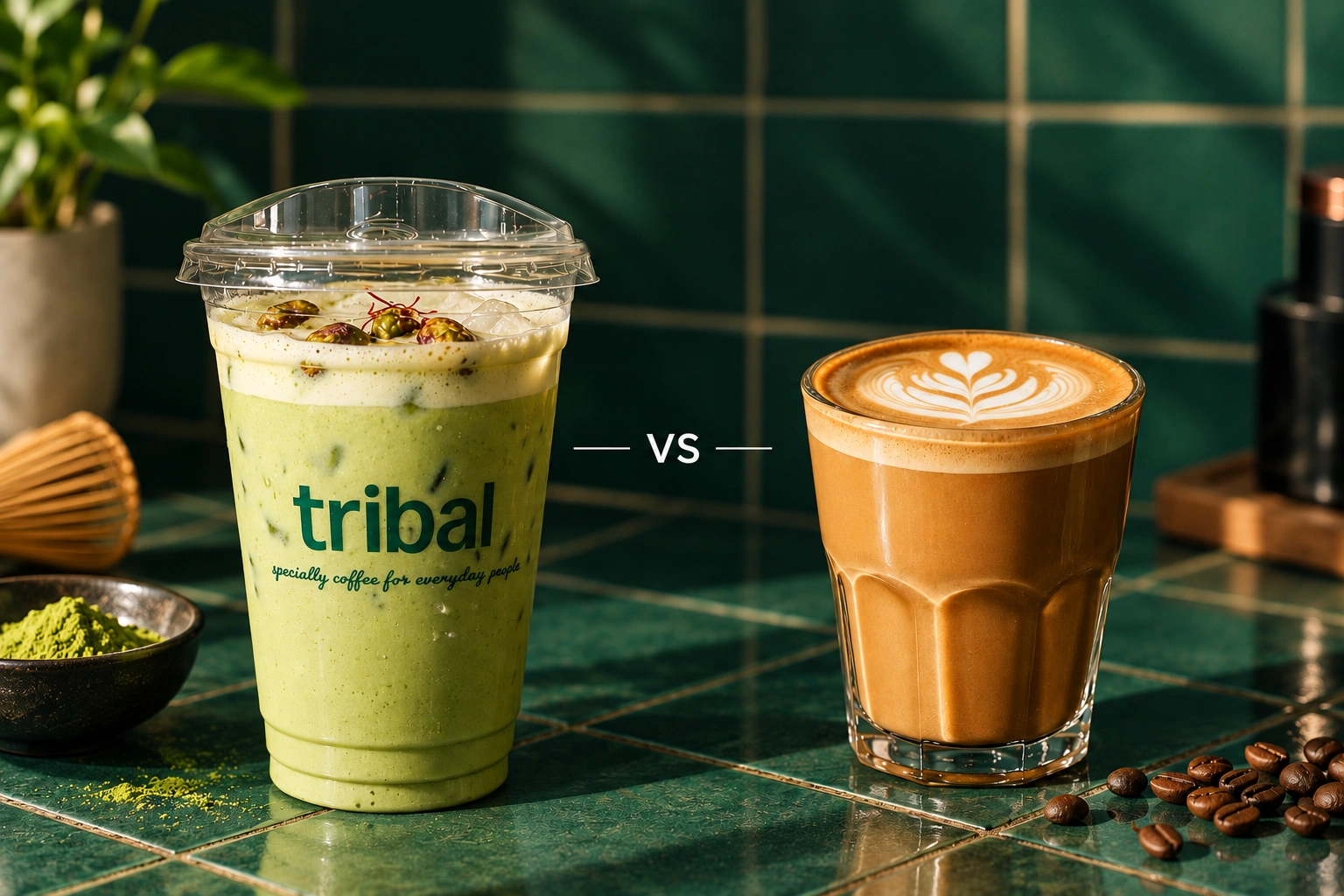
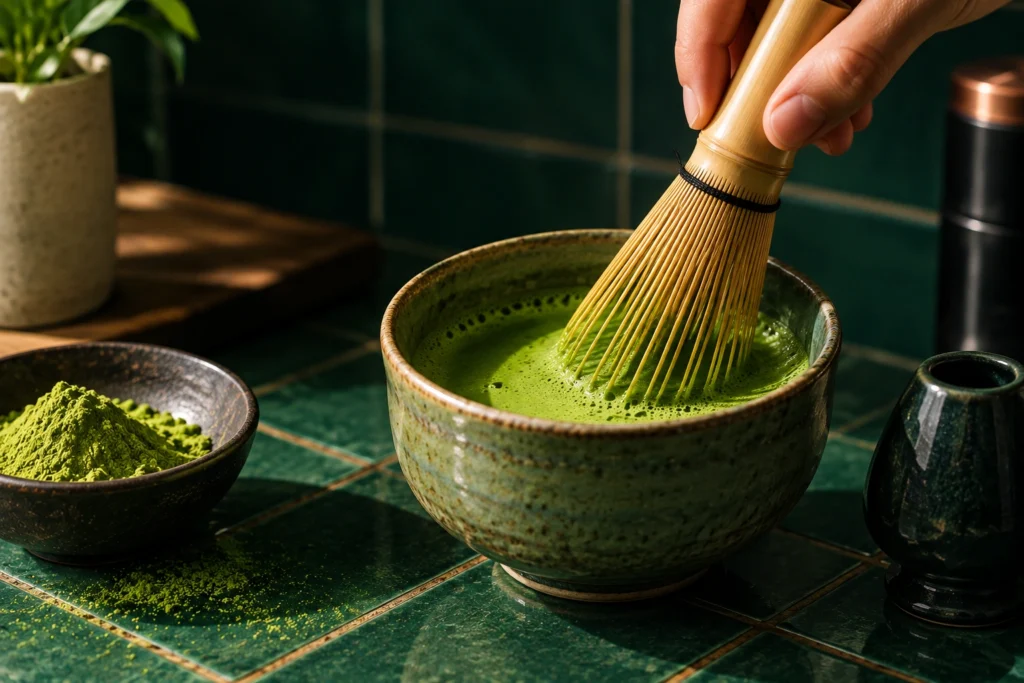
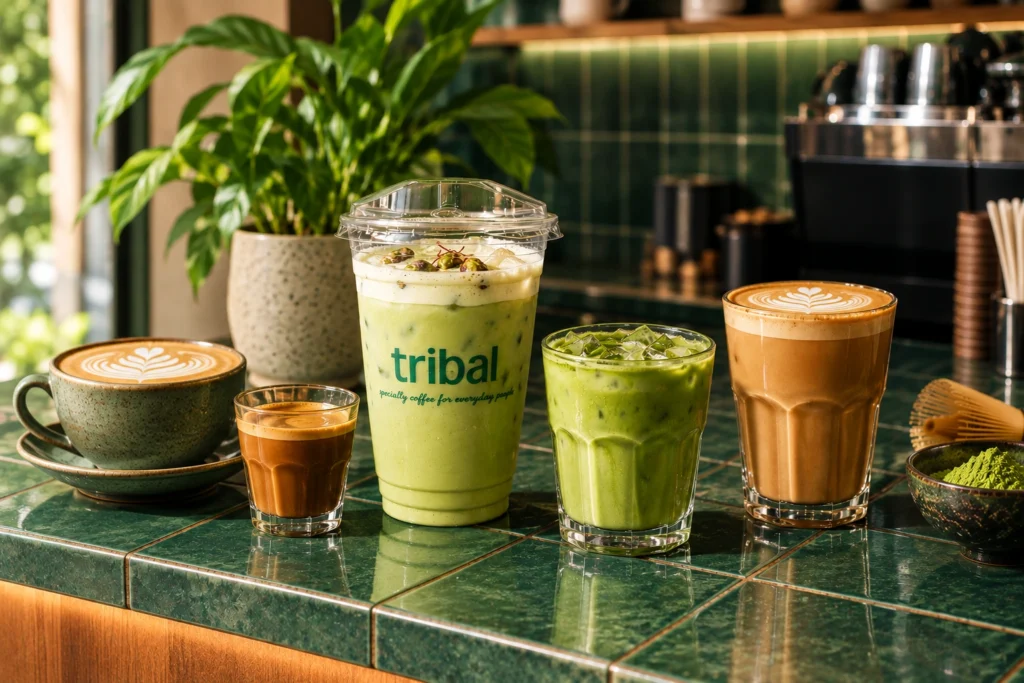
The matcha vs coffee debate has quietly moved from niche wellness forums into mainstream café menus. In DHA Lahore right now, you can walk into Tribal Cafe and order either a double espresso or a Coconut Cloud Matcha — and both will be made with the same care, from the same quality baseline. The question of which one to order isn’t as simple as preference anymore. It’s worth understanding what each actually does.
This guide cuts through the marketing on both sides. Matcha is not magic. Coffee is not poison. Both have legitimate, evidence-backed effects on energy, focus, and health — and the right choice depends almost entirely on what you’re trying to get out of the next few hours.
The Core Difference: It’s Not Just About Caffeine
Most matcha vs coffee comparisons start and end with caffeine. That’s the wrong frame. The more important question isn’t how much caffeine each contains — it’s how that caffeine behaves in your body.
How Much Caffeine Each Actually Contains
A standard serving of matcha (2 grams of powder in 150ml of liquid) contains approximately 70mg of caffeine. A standard 8oz cup of filter coffee contains approximately 95mg. A double espresso sits at around 120–140mg depending on the beans and extraction.
So coffee generally wins on raw caffeine quantity. But that number tells you less than you’d think.
Why Matcha’s Caffeine Feels Different
Matcha contains L-theanine — an amino acid found almost exclusively in tea plants, with particularly high concentrations in shade-grown ceremonial-grade matcha. A standard serving contains 30–46mg of L-theanine. Coffee contains zero.
L-theanine doesn’t block caffeine. It modifies how caffeine is experienced. Specifically, it promotes alpha brain wave activity — the same brain state associated with relaxed alertness and flow states — while simultaneously moderating the anxious, jittery quality that caffeine alone produces in many people. The result is that matcha’s 70mg of caffeine feels qualitatively different from coffee’s 95mg, even though the absolute dose is lower.
Studies published in peer-reviewed journals consistently show that the combination of L-theanine and caffeine outperforms caffeine alone on measures of sustained attention and working memory. The mechanism is understood: caffeine increases dopamine and norepinephrine activity (alertness), while L-theanine promotes GABA and alpha wave activity (calm). Together they produce focused calm. Separately, caffeine produces stimulation that tips toward anxiety at higher doses.
The honest answer is: it depends on what kind of energy you need.
Coffee for fast, high-impact energy: Caffeine from coffee absorbs quickly — you feel the effect within 15–30 minutes. It’s the better choice when you need to be alert fast, when you have a morning that starts at 7AM and doesn’t allow for a slow build, or when you’re going into something that requires immediate high intensity.
The downside is the crash. Coffee’s caffeine peaks sharply and wears off at a rate that many people experience as a noticeable drop — the 11AM slump after a 7AM double espresso is a real phenomenon, not a myth.
Matcha for sustained, even energy: Matcha’s caffeine absorbs more slowly and the L-theanine extends how long you feel alert without the sharp peak-and-drop pattern. The energy curve is flatter and longer — less dramatic at the top, less painful at the bottom. For a four-hour work session, a long afternoon of studying, or any situation where you need sustained attention rather than immediate intensity, matcha is the more practical choice.
The data supports this: matcha’s caffeine-plus-L-theanine pairing consistently produces longer-lasting focus states than caffeine alone.
Focus: The L-Theanine Advantage
This is where matcha has a genuinely documented edge.
The combination of L-theanine and caffeine has been studied in multiple clinical trials and consistently outperforms caffeine alone on tasks requiring sustained attention, task-switching, and working memory. The mechanism isn’t complicated: caffeine provides the alert state, L-theanine removes the anxious noise that comes with it.
For people who find that coffee makes them feel wired rather than focused — thoughts jumping, harder to stay on one thing, slightly anxious — this is the physiological explanation. The caffeine is doing its job (stimulation) but without L-theanine to moderate it, the experience tips from alert into overstimulated.
Matcha doesn’t have that problem. The L-theanine is built in.
This is why matcha is consistently recommended for tasks requiring deep, sustained focus — writing, studying, detailed analytical work — rather than tasks requiring quick, reactive energy. If your next two hours involve one difficult problem rather than five quick ones, matcha is the more targeted tool.
Health: An Honest Assessment
Both matcha and coffee have legitimate health benefits. Neither is a magic bullet.
Coffee’s documented benefits:
Strong evidence linking regular coffee consumption to reduced risk of type 2 diabetes, Parkinson’s disease, and certain liver conditions
Rich in chlorogenic acids with antioxidant and blood-sugar-regulating properties
One of the most studied dietary substances in the world — the evidence base is extensive
Matcha’s documented benefits:
Significantly higher antioxidant density than coffee — ORAC score of approximately 1,384 units per gram versus coffee’s roughly 300
Rich in EGCG (epigallocatechin gallate), a catechin with well-studied anti-inflammatory and neuroprotective properties
Because you consume the whole leaf as a powder rather than a water infusion, you retain compounds that brewed coffee discards with the grounds
L-theanine has independently documented benefits for stress reduction and cognitive function beyond its interaction with caffeine
The honest verdict on health: matcha has higher antioxidant density and unique compounds from whole-leaf consumption. Coffee has a larger and longer evidence base for specific disease outcomes. Neither is definitively healthier — they offer different compounds with different documented effects.
Taste: What to Expect From Each
The taste profiles of matcha and coffee are entirely different — there’s no spectrum between them, they’re just different things.
Coffee is bitter, bold, and complex. Specialty-grade coffee has brightness (acidity), body, and a clean finish when brewed correctly. It’s an acquired taste for many people, and the bitterness that puts people off is almost entirely a function of bean quality and extraction — good specialty coffee from a quality roaster is considerably less bitter than the commercial versions that formed most people’s first impressions.
Matcha is vegetal, umami, and slightly sweet. Ceremonial-grade matcha — the kind used in the matcha fusions at Tribal Cafe — has a natural sweetness, a grassiness that is pleasant rather than sharp, and an earthy depth that is hard to compare to anything else. People who expect matcha to taste like green tea are usually surprised: it’s richer, more complex, and more interesting than the tea bag version.
If you’ve tried matcha once and found it unpleasant, the most likely explanation is that it was culinary-grade rather than ceremonial-grade. The taste difference between grades is significant — culinary matcha is bitter and flat, ceremonial matcha is smooth and naturally sweet. The Coconut Cloud Matcha is the most approachable starting point if you’re new to it — the coconut milk softens the matcha’s earthiness and makes the whole drink feel lighter and more accessible.
The Trend Worth Knowing: Dirty Matcha
As matcha has become mainstream, a hybrid drink has emerged that bridges both worlds: dirty matcha — matcha combined with a shot of espresso, typically served over ice with milk. Global search volume for dirty matcha grew 75% in 2025–2026, and it’s now a recognised menu category at specialty cafés internationally.
The appeal is the combination of coffee’s fast-acting caffeine hit with matcha’s L-theanine moderating effect — in theory, the best of both. In practice, the combined caffeine dose (matcha’s 70mg plus espresso’s 60–70mg) puts the drink firmly in the morning category rather than an afternoon option for anyone sensitive to caffeine. But for those who want both and have the tolerance for it, it’s a genuine option worth trying.
Which Should You Actually Be Drinking?
Choose coffee (espresso) when:
You need to be alert quickly
It’s early morning and you need a fast start
You want the most intense caffeine effect from the smallest volume
You enjoy the taste of coffee specifically and don’t want to replace it
Choose matcha when:
You have a long focus session ahead
You’re stressed and adding more espresso-intensity to that isn’t helping
You find coffee gives you jitters or anxiety
You want caffeine in the afternoon without disrupting sleep
You’re cutting back on coffee and need something that still does a job
Choose both (at different times): The most practical answer for most people isn’t matcha or coffee — it’s matcha and coffee, used deliberately at different points in the day. Coffee for the morning start, matcha for the afternoon focus window. This is how many people who understand both drinks actually use them.
Both are available at Tribal Cafe in DHA Phase 6. The classic espresso collection covers the coffee side of that equation; the matcha fusions collection covers the other. And if you want something that combines elements of both, ask at the counter.
Frequently Asked Questions
Does matcha have more caffeine than coffee?
No — matcha contains approximately 70mg of caffeine per serving versus roughly 95mg in a standard cup of filter coffee or 120–140mg in a double espresso. However, the caffeine in matcha is moderated by L-theanine, an amino acid that changes how the caffeine is experienced — producing a calmer, more sustained alertness rather than the sharp spike-and-crash pattern associated with coffee.
Is matcha better than coffee for anxiety?
For people who find coffee produces jitteriness or anxiety, matcha is generally the better option. L-theanine directly moderates caffeine’s anxiogenic effects by promoting alpha brain wave activity and GABA — the brain’s calming neurotransmitter. Many people who have stopped drinking coffee due to anxiety find they can comfortably drink matcha at moderate quantities.
Which is healthier — matcha or coffee?
Both have documented health benefits. Matcha has higher antioxidant density and unique compounds from whole-leaf consumption, including EGCG with well-studied anti-inflammatory properties. Coffee has a larger evidence base for specific outcomes like reduced risk of type 2 diabetes and liver disease. Neither is definitively healthier — they offer different compounds with different effects.
Can I drink matcha and coffee on the same day?
Yes — many people use them at different points in the day deliberately. Coffee in the morning for fast energy, matcha in the afternoon for sustained focus without disrupting sleep. The combined caffeine intake from both should be monitored if you’re sensitive to caffeine.
Where can I try ceremonial grade matcha in DHA Phase 6 Lahore?
Tribal Cafe at Shop 9, Sector C, DHA Phase 6 serves ceremonial-grade matcha daily from 7AM to 1AM across eight matcha fusions — including the Coconut Cloud Matcha, Lavender Matcha, Classic Matcha, and more. For something personalised, the custom coffee builder lets you design your own drink from scratch.
What is dirty matcha?
Dirty matcha is matcha combined with a shot of espresso, typically served over ice with milk. It combines coffee’s fast-acting caffeine with matcha’s L-theanine moderating effect. It grew 75% in global search volume in 2025–2026 and is now a recognised specialty café drink internationally.
Lahore has approximately five months of weather that makes a hot cup of coffee feel like a bad idea the moment it leaves the counter. From April through August, the city runs at temperatures that put anything steaming into the
There’s a specific kind of cold coffee that appears on specialty café menus and consistently confuses people who haven’t encountered it before. It’s called a shaken espresso. It sounds simple — espresso, shaken — and it is, technically. But what
If you’ve been to a café in DHA Lahore recently, you’ve almost certainly seen a Spanish Latte on the menu. It sits there next to the regular latte, usually at a slightly higher price, with a description that either says