Stand at the counter of any café in DHA Phase 6 and you’ll see the same thing play out repeatedly: someone stares at the menu, spots espresso, latte, and cappuccino listed within three lines of each other, and orders whichever one they recognise most — not necessarily the one they’d enjoy most. It’s an easy trap. The names come from Italian, the difference between them isn’t obvious from a menu description, and nobody wants to ask for an explanation while a queue forms behind them.
This guide gives you that explanation without the queue. It covers what each drink actually is, how they differ in ratio, texture, strength, and taste, and most importantly — which one you should be ordering based on what you actually want.
The One Thing All Three Have in Common
Before the differences: espresso, latte, and cappuccino are all built on the same foundation. Every one of them starts with a shot — or two — of espresso. The espresso doesn’t change. What changes is everything that happens after it leaves the portafilter: how much milk, how much foam, and in what ratio.
This is the key to understanding all three drinks at once. You’re not choosing between different flavours of coffee — you’re choosing between different ratios of the same coffee base. The espresso is the constant. The milk and foam are the variables. Get that right and the rest follows naturally.
Espresso — The Foundation
What It Is
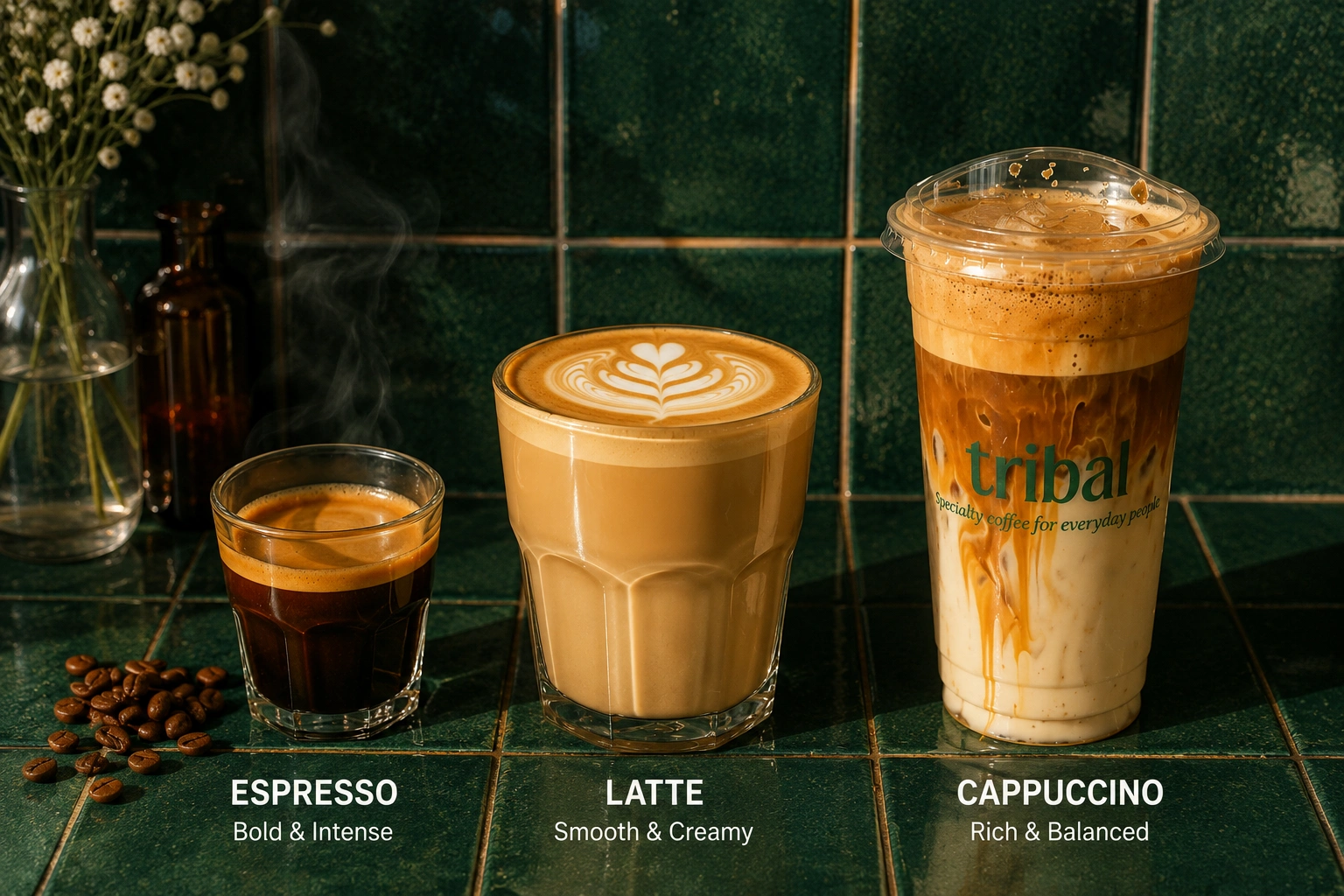
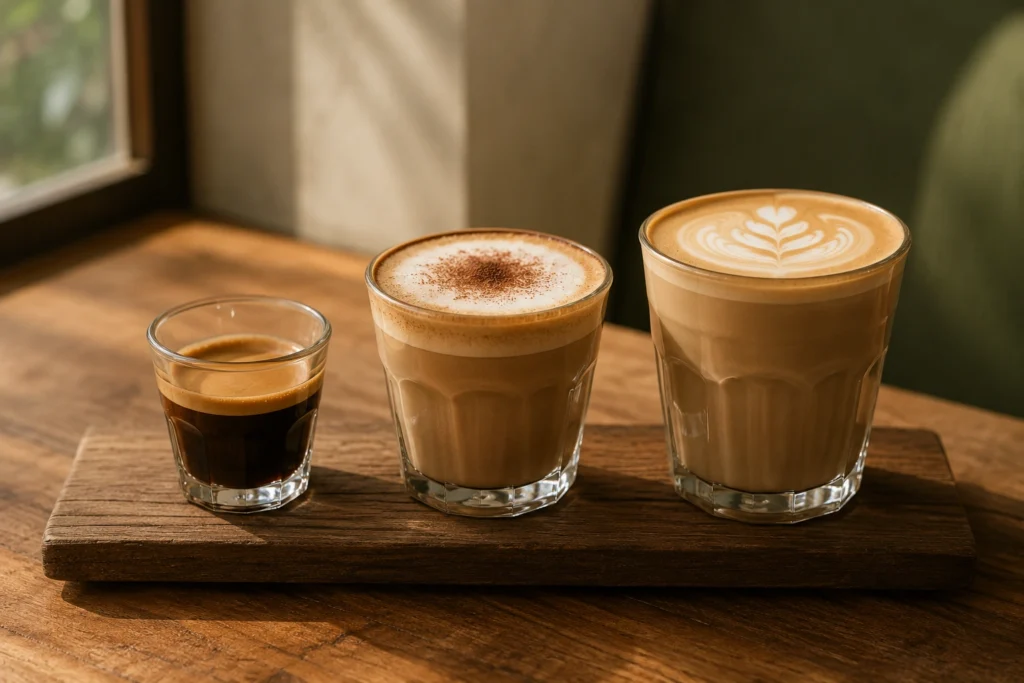
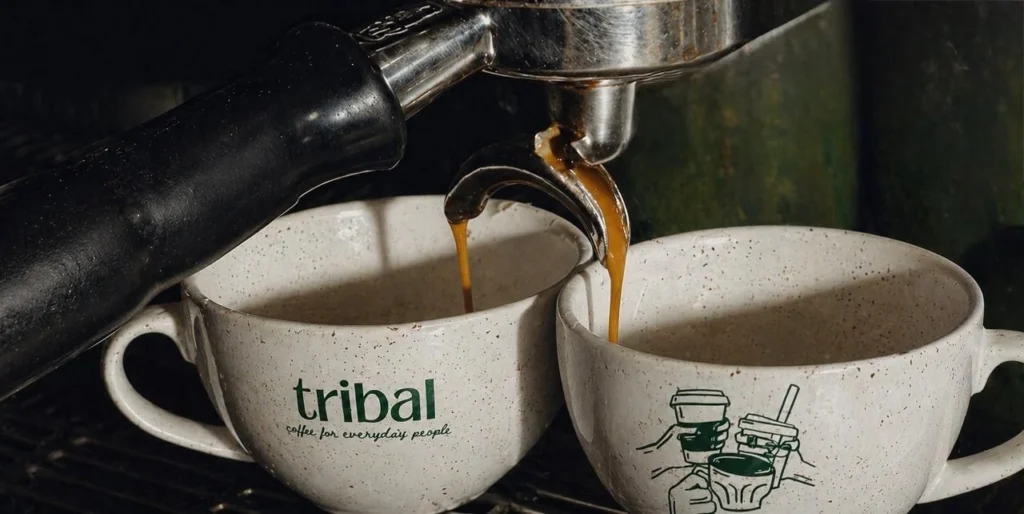
Espresso is coffee brewed under pressure. Hot water is forced through finely ground coffee at around 9 bars of pressure, extracting a small, highly concentrated shot — typically 25–30ml — in 25–30 seconds. The result is thick, dark, and intensely flavoured, with a layer of golden crema on top that a properly extracted shot always carries.
It is the base of both the latte and the cappuccino. It is also a drink in its own right.
What It Tastes Like
Espresso is the most direct expression of whatever bean is being used. No milk to soften it, no foam to dilute it — just the coffee, concentrated and clear. Done well with specialty-grade beans, it has layers: a brightness at the front, body in the middle, a clean finish. Done badly with commercial beans or over-extracted, it tastes bitter and flat.
At Tribal, every espresso shot is pulled from specialty-grade, in-house roasted beans — which is why an espresso here tastes noticeably different from the commercial version most people have tried and dismissed.
Who Should Order It
Order espresso if you want the fastest, most direct caffeine delivery on the menu. Order it if you want to taste the coffee itself without anything in the way. Order it if you’re short on time and need to be somewhere in five minutes. A double shot at Tribal will cost you thirty seconds and carry you through the next two hours.
The full range of espresso-based classics — including espresso, Americano, Cortado, Flat White, Cappuccino, and Latte — is available through the classic espresso collection.
Latte — The Gateway Drink
What It Is
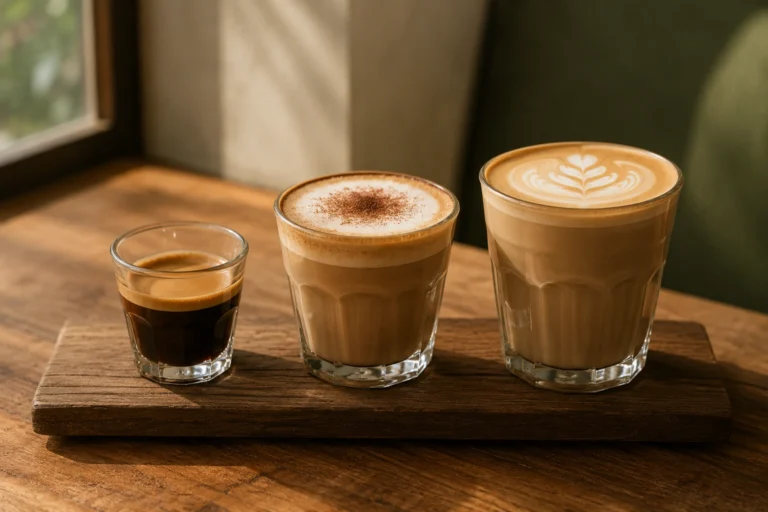
Latte is short for caffè latte — Italian for “milk coffee,” which is exactly what it is. One or two shots of espresso, combined with a large proportion of steamed milk, topped with a thin layer of microfoam. The standard ratio is roughly 1 part espresso to 3–4 parts milk.
That high milk ratio is everything. It’s what makes the latte the most approachable espresso drink on any menu, the most customisable, and — in Pakistan — the most consistently ordered.
What It Tastes Like
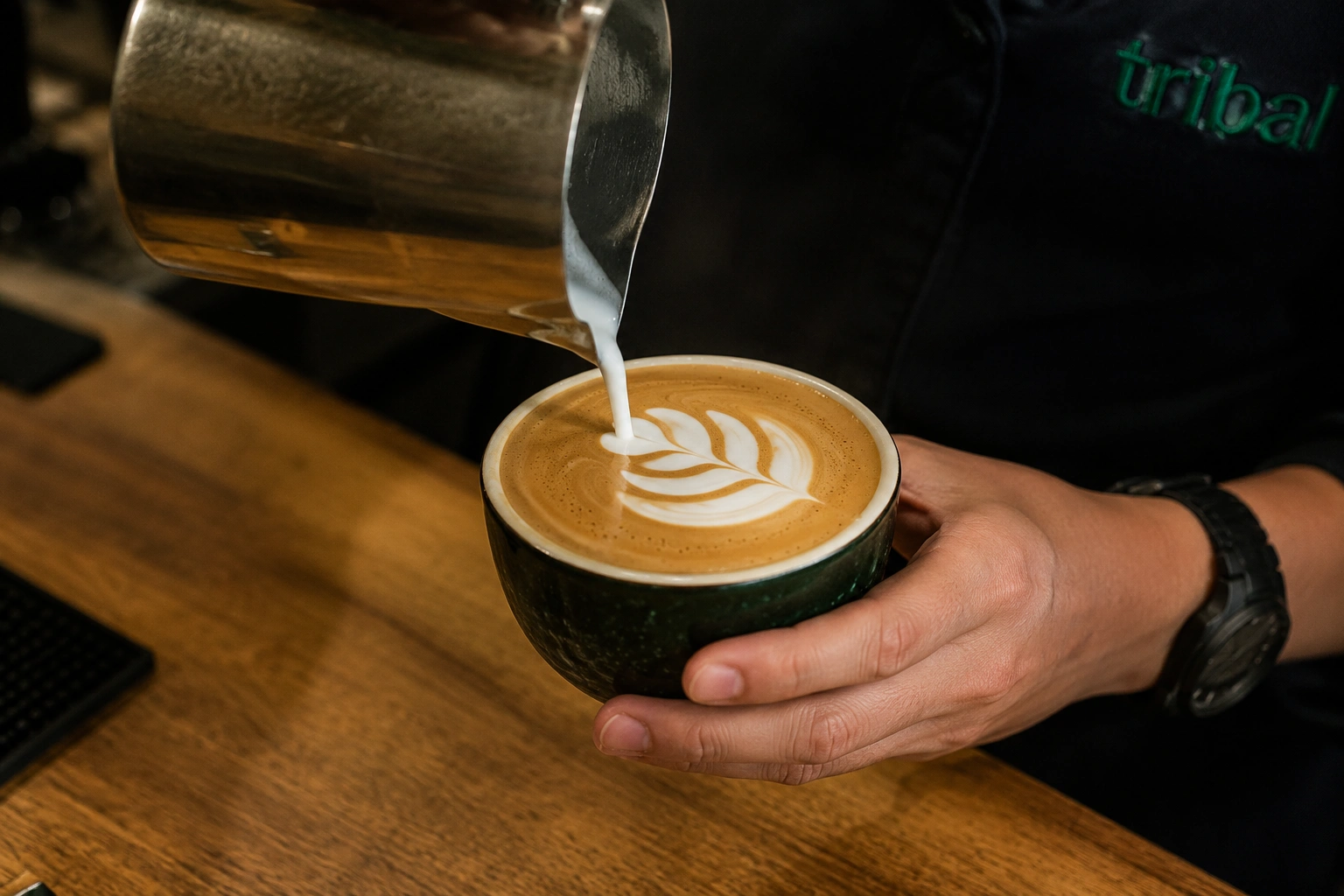
Creamy, smooth, and mild. The large volume of steamed milk softens the espresso considerably, producing a drink that is noticeably coffee-flavoured but not intense. The microfoam on top is silky rather than airy — it integrates with the milk rather than sitting separately on top. A well-made latte has a natural sweetness from the steamed milk that most people don’t expect the first time they order one without sugar.
This is also why lattes are the base for most flavoured versions: the mild coffee background allows hazelnut, vanilla, cookie butter, or saffron to come through clearly without competing with a strong espresso flavour underneath. Our Latte is the starting point — and the flavoured lattes in The Rituals collection are where that base goes when it has somewhere interesting to go.
Who Should Order It
Order a latte if you’re new to espresso-based coffee and want something approachable. Order it if you prefer something mild and creamy over something bold and sharp. Order it if you want a flavoured version — lattes carry added flavour better than any other espresso drink. Order it if you want a large, comforting drink you can sit with for twenty minutes.
One thing worth knowing about the latte in the Pakistani context: it is functionally the closest thing to phitti hui coffee (the beaten instant coffee most of us grew up with at home) that a café menu offers — creamy, milk-forward, and sweet without being aggressive. The cultural familiarity is part of why it became the default order for a generation of Lahore’s café-going youth.
Cappuccino — The Middle Ground
What It Is
A cappuccino is made with equal parts espresso, steamed milk, and milk foam — roughly one-third each. The total volume is smaller than a latte (traditionally 150–180ml versus 250–350ml for a latte), and the foam layer is considerably thicker and airier.
That equal-thirds ratio is what makes the cappuccino the most balanced espresso drink. It’s not as concentrated as a straight espresso, not as mild and milk-forward as a latte — it sits precisely between the two.
What It Tastes Like
Bolder than a latte, lighter than an espresso. The thick foam gives the cappuccino a texture that a latte doesn’t have — airy, slightly resistant, and distinct from the silky microfoam of a latte. You taste the espresso more clearly in a cappuccino because there’s less milk to soften it. The foam itself adds a lightness that makes each sip feel less dense than a latte despite the comparable ingredients.
A properly made cappuccino at a specialty café — where the foam is produced from fresh milk steamed to exactly the right temperature — is one of the most satisfying things on a coffee menu. Our Cappuccino is made to exactly this standard.
Who Should Order It
Order a cappuccino if you want more espresso character than a latte offers but aren’t ready for a straight shot. Order it if you want a smaller, more concentrated drink rather than a large, milky one. Order it in the morning — this is not coffee snobbery, it’s practical: the high foam ratio makes a cappuccino feel substantial as a breakfast drink in a way a latte doesn’t quite match.
The One They Don’t Always List: Cortado
While we’re here — if you’ve tried both a latte and a cappuccino and found the latte too mild and the cappuccino not quite hitting the right note, there’s a third option worth knowing about.
The Cortado is equal parts espresso and steamed milk — no foam, no large milk volume, just a 1:1 ratio that produces a drink considerably stronger than a latte and considerably less texturally complex than a cappuccino. It’s the drink that people who work in coffee consistently default to: enough milk to smooth out the espresso, not enough to dilute it. Small, direct, and genuinely good when the espresso underneath is worth tasting.
If you’ve been ordering a latte and finding yourself wishing it tasted more like coffee, a Cortado is the natural next step.
The Practical Comparison
Espresso
Cappuccino
Latte
Cortado
Espresso ratio
100%
~33%
~20–25%
~50%
Milk
None
Steamed (equal part)
Steamed (large)
Steamed (equal part)
Foam
Just crema
Thick and airy
Thin microfoam
Minimal
Volume
25–30ml
150–180ml
250–350ml
60–90ml
Coffee strength
Very strong
Strong
Mild
Strong
Best for
Speed, purity
Balanced mornings
Beginners, comfort
Coffee lovers who want milk
The Pakistan Context — Why This Matters Here
Pakistan came to café coffee culture relatively recently compared to Europe or Australia, and the path it took was specific. Most people’s first experience of coffee at home was phitti hui coffee — instant coffee beaten with sugar and hot milk into something frothy and sweet. It was closer to a dessert than a drink, and it set an expectation that coffee should be creamy, sweet, and forgiving.
When chain cafés arrived, the latte became the natural transition — it’s the drink that most closely resembles the familiarity of that homemade version while being made with real espresso. Cappuccino came second, appealing to people who wanted something a bit bolder. Straight espresso remained unfamiliar to most, associated with bitterness because the beans in most commercial chains weren’t good enough to drink without milk.
The shift happening now — in DHA Phase 6 and across Lahore’s specialty café scene — is towards the espresso end of that spectrum. As more people encounter genuinely good specialty-grade coffee (the kind that actually tastes good without sugar or milk), straight espresso and cortado orders are increasing. It’s not a trend — it’s what happens when the bean quality is good enough that the coffee doesn’t need anything to make it worth drinking.
Order espresso if: you want the coffee itself, you’re in a hurry, or you’re curious what the bean actually tastes like without anything in the way.
Order a cappuccino if: you want a balanced, moderately sized drink with clear espresso character and a textural experience the latte doesn’t offer. Best in the morning.
Order a latte if: you want something mild, creamy, and large. If you’re new to espresso. If you want a flavoured version. If you’re staying for a long session and want something you can drink slowly.
Order a cortado if: you’ve graduated past the latte and want to taste the coffee more clearly without giving up the milk entirely.
All four are on the Tribal menu as part of the classic espresso collection. And if none of the above quite fits what you’re looking for, the custom coffee builder lets you set your own ratio from scratch.
Frequently Asked Questions
What is the difference between a latte and a cappuccino?
A latte uses more steamed milk (roughly 3–4 parts milk to 1 part espresso) and a thin layer of microfoam, producing a mild, creamy drink. A cappuccino uses equal parts espresso, steamed milk, and thick foam, producing a bolder, more textured drink in a smaller volume. The espresso content is typically the same — the difference is in the milk ratio and the foam.
Is a cappuccino stronger than a latte?
In terms of espresso content per serving they are often similar, but the cappuccino tastes stronger because the espresso flavour is less diluted by milk. A latte’s large milk volume softens the espresso considerably; a cappuccino’s equal-thirds ratio keeps the coffee flavour more present.
What is the difference between espresso and latte?
Espresso is a small, concentrated shot of coffee with no milk. A latte is that same espresso combined with a large amount of steamed milk and a thin foam layer. A latte tastes significantly milder and creamier; an espresso tastes concentrated and direct.
Which is better for beginners — espresso, latte, or cappuccino?
A latte is the most approachable starting point — the large milk ratio produces a mild, naturally sweet drink that eases you into espresso without the intensity of a straight shot. From there, the natural progression is cappuccino (more espresso character, more texture), then cortado (equal parts, no foam), then espresso on its own.
What is a cortado and how does it compare to a latte?
A cortado is equal parts espresso and steamed milk — typically 30ml espresso and 30ml milk — with minimal foam. It is considerably stronger than a latte and considerably smaller, producing a drink where the coffee flavour dominates rather than the milk. It’s the right next step for latte drinkers who want to taste the coffee more clearly.
Which coffee is most popular in Pakistan — espresso, latte, or cappuccino?
The latte is consistently the most ordered espresso drink in Pakistani urban cafés, driven by its mild, creamy flavour profile and proximity to the familiarity of phitti hui coffee. Cappuccino is the second most popular. Straight espresso is growing in popularity as specialty coffee culture develops in cities like Lahore, Karachi, and Islamabad.
Not finding exactly what you’re looking for on the menu?
Every drink at Tribal starts with the same specialty-grade espresso base — but the ratio, the milk, the temperature, and the flavour are all adjustable. Instead of settling for the closest option, build the exact cup you actually want.
DHA Phase 6 has quietly become one of Lahore’s most productive neighbourhoods to work from — not in an office, but in a café. The combination of a young professional and student population, reliable commercial development, and a growing number
Lahore has approximately five months of weather that makes a hot cup of coffee feel like a bad idea the moment it leaves the counter. From April through August, the city runs at temperatures that put anything steaming into the
There’s a specific kind of cold coffee that appears on specialty café menus and consistently confuses people who haven’t encountered it before. It’s called a shaken espresso. It sounds simple — espresso, shaken — and it is, technically. But what